

Call a local advisor
+86 186 1196 4400Email our team
info@tour-beijing.comTour Beijing Journal
Plan your Wuyi Mountains tour? Water Curtain Cave is one of the important attractions in Wuyi Mountains Scenic Area. Water Curtain Cave is not far from the
Two ways to visit Water Curtain Cave and Da Hong Pao tea trees for a half day trip:
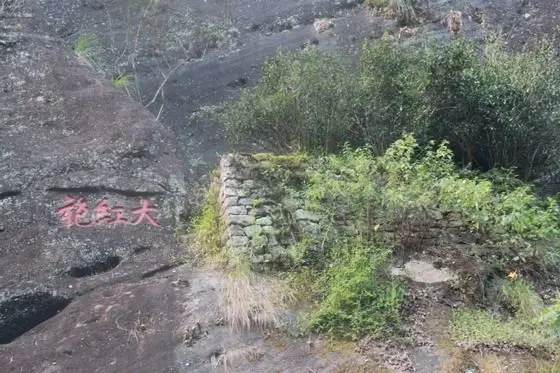
We chose the second way of travel hiking all the way from the Bus Terminal for Water Curtain Cave to the site of Da Hong Pao. The 4270 meters trek turned out to be the highlight of our 3 day trip in Wuyi Mountains. It is a pity that no organized group tours would cover the highlight hike from Water Curtain Cave to the site of Da Hong Pao. Maybe I think too much. Those who don't know the trail will never feel shamed about this.
Walking from Water Curtain Cave Bus Terminal to the fork leading up to Water Curtain Cave 450 meter
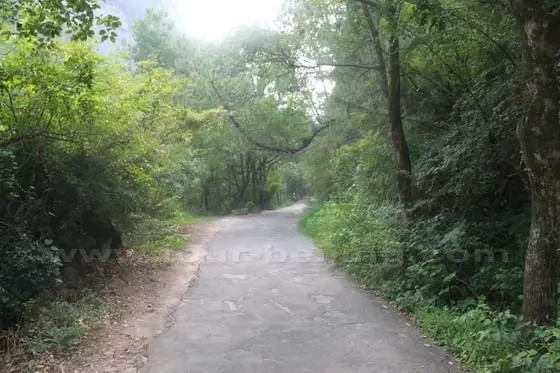
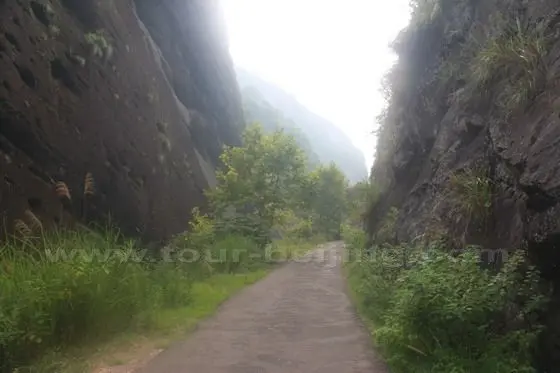
The 450 meter walking from the entrance to the fork was very comfortable with a smooth asphalt road flanked by green arched trees.
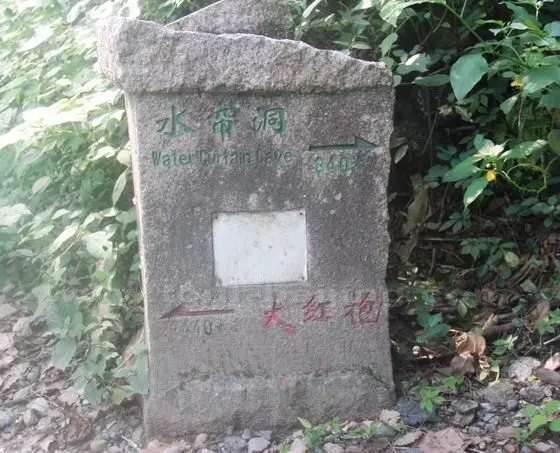
A stone sign appointing to the right up to Water Curtain Cave and the left down to Da Hong Pao.
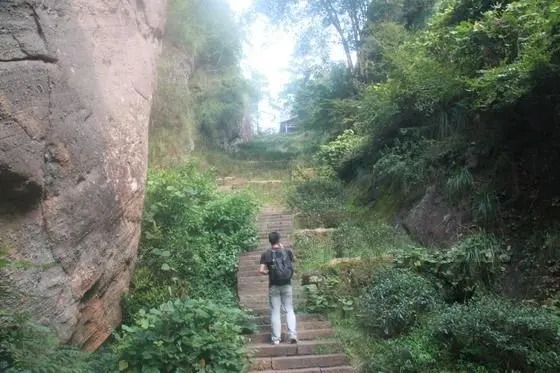
We clambered on the slab paved mountain road leading up to our first destination Water Curtain Cave. On the way up, we found lots of ancient tea bushes planted by different tea companies.
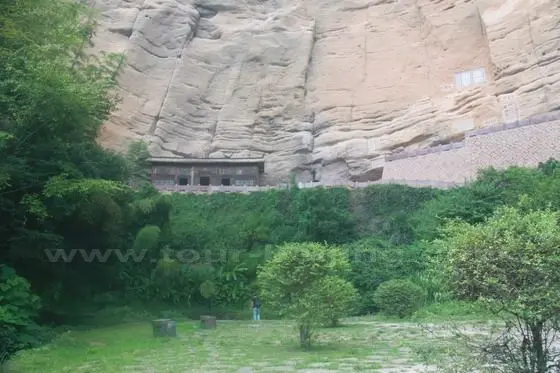
At the end of our 800 meter hike, we approached a flat high land with s big stele engraved with the three Chinese characters - 水帘洞 (Water Curtain Cave). We made it, close to the site Water Curtain Cave.
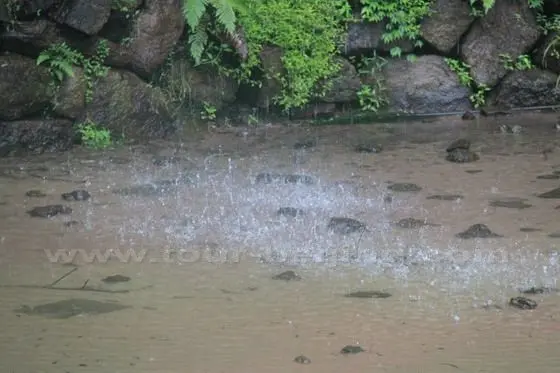
The Water Curtain Cave is said to be the biggest rock cave ( a shallow and open cave ) in Wuyi Mountains. It has a slanting top similar to upturned eaves. A few streams fall down from the rock cave top. The falling stream water is turned into numerous drops of water mainly due to the wind and the 100 meter hight in difference, forming a running water curtain. Summer is not the rainy season in Wuyi Mountains. It was a little disappointed that we didn't expect much water fall from the top.
It was a little disappointed that we didn't expect much water fall from the top.
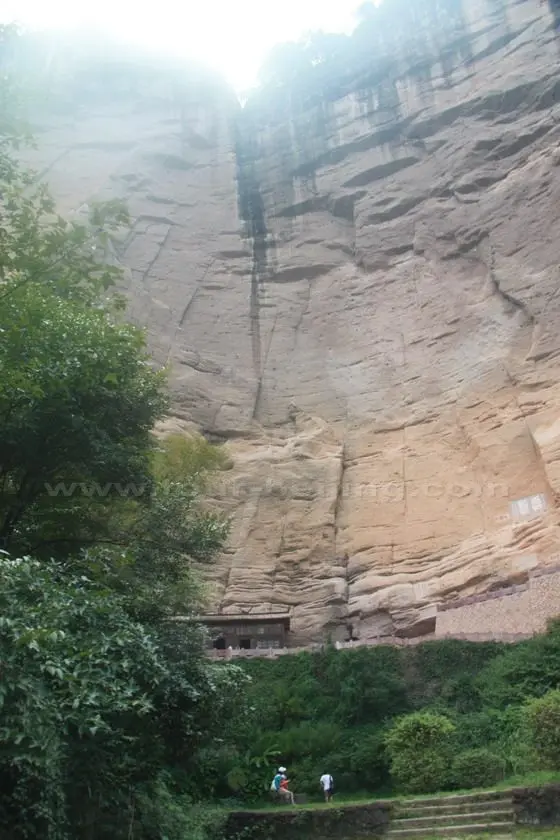
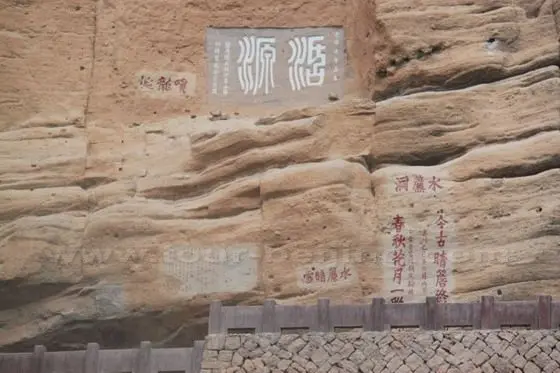
On the right side in the cave midway, there are a number of Chinese calligraphy engraving with "活源" ( Live Water Resource ) written by Mr. Yu Hongliang, one of the generals in Zhejiang in Qing Dynasty. The two characters ""活源" came from the well known scholar in Song Dynasty - Chucius.
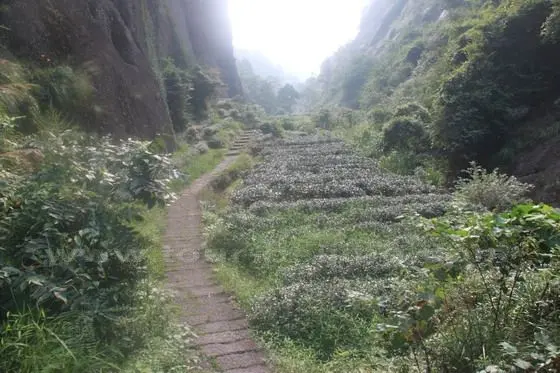
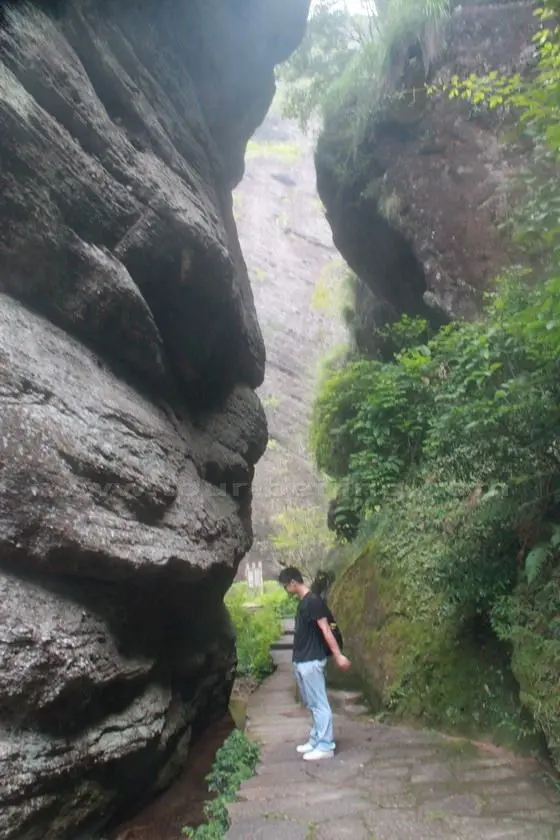
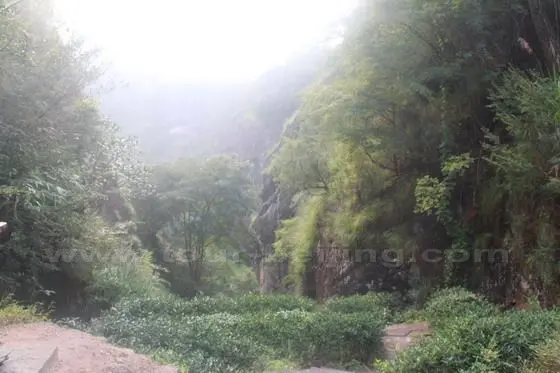
So we forked from the main road and started our adventure in the ravine. Actually later we found all the way we hiked different ravines, like walking in a landscape corridor where everything was green, pure and fresh.
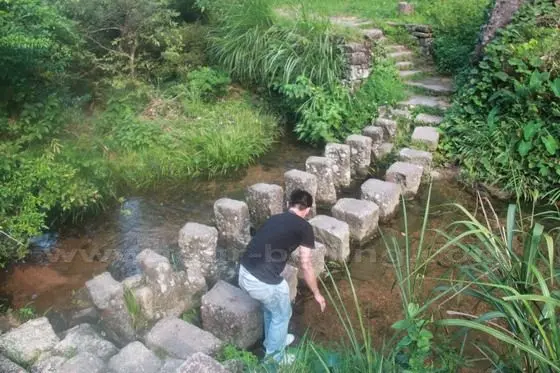
We first hiked along Zhangtang Brooklet nestled in the valley. The ravine was rich with vegetation and tea trees.
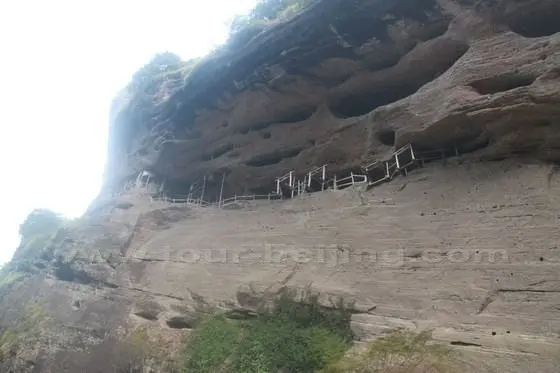
On the south bank of Zhangtang Booklet stands the Danxia Peak. In the caves of various sizes in the cliff there are several ancient cave dwellings of wooden structures. They were made by the local landlords who had employed people to build the hanging cave houses to avoid the civil war waged by Taiping Army in Qing Dynasty.
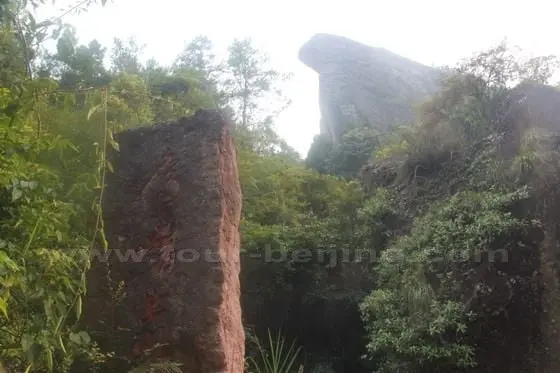
The huge rock road sign reminded us that the famous Eagle' Beak Rock was in sight.
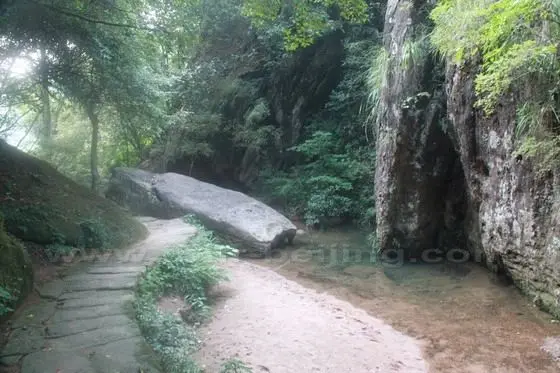
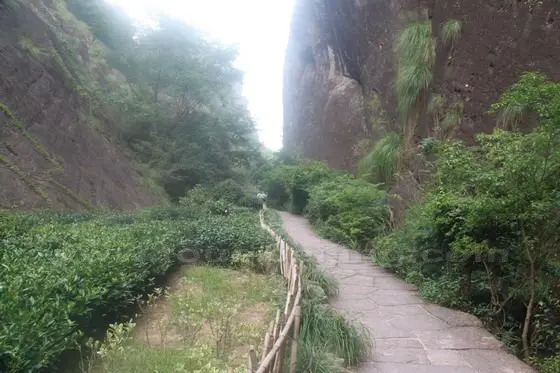
The slab paved road paralleled the Zgangtang Booklet, shady, clean and quite.
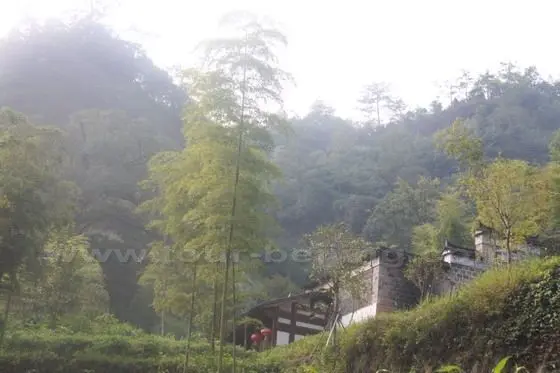
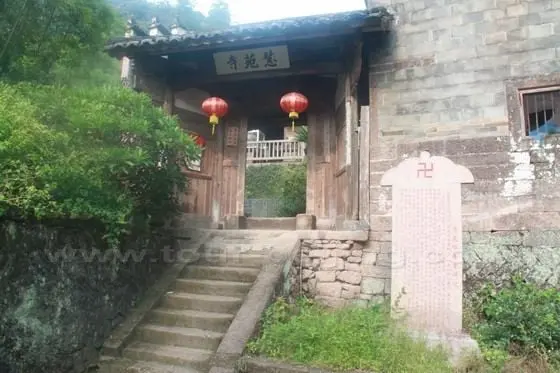
Hui Yuan Temple was built in Song dynasty, and rebuilt in late Ming Dynasty and early Qing Dynasty. The temple is a local style house structure and comprises three religions into one - Confucianism, Taoism and Buddhism.
The temple has a Confucian style entrance hall and main Confucian atmosphere in the temple and Taoist style pavilion. Chucius stayed one night and wrote the words " Be Quite My God" on the horizontal inscribed board which is well preserved now. On the pillars there are two lines of Chucian poem - Guests don't hate to take tea for wine while regard bamboo as neighbourhood".
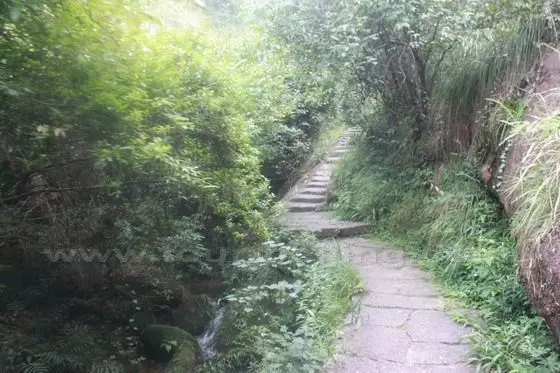
Accompanied by the running creek, we moved on along the bushy mountain road.
Any questions, just drop a line.
Hand-picked routes matched from this post's destination clues and curated travel themes.
Use these attraction notes to connect nearby sights with tours, destination guides, and planning articles.
Subscribe to receive Beijing travel ideas and tour updates.
More single-day ideas selected by the Local Guide Desk. Open an Experience to see whether it is available online or by request.


Leave a Reply
Share a question or note for this guide. Comments are reviewed before publishing.